TDMI decision type
SATU
The Conscientious Executioner
You actively take time to choose away from the preset.
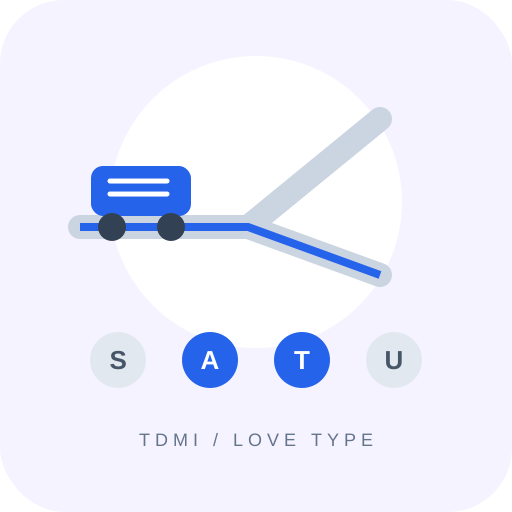
This is a general type guide. Take the test to see your own response times and changes of choice.
🎬Bring your photo to life with AI videoReading this type: The Conscientious Executioner
You actively take time to choose away from the preset. Your choices are consistent in direction, while the path to deciding shows caution. More thinking time cannot be equated directly with higher moral worth.
What the four letters mean
- S: Basis of judgment. Across the 7 attribute-based questions, the indicator falls on the side away from the preset victim route, including a zero-score boundary. This does not establish a person's moral worth.
- A: Mode of involvement. Active input and recorded choices are reflected across the run, including its unanswered rounds.
- T: Response consistency. The combined indicator of answer direction and choice timing shows consistency. This does not directly measure emotional or personality stability.
- U: Decision speed. The median response time and changes of choice indicate more time spent deciding.
Compare with your own record
What remained constant while you hesitated? Did taking time help you feel more settled about your choice?
The mean shown on the result page measures time to the final change on answered questions. The speed axis instead also uses the median and unanswered records. You cannot infer the four-letter code from the mean alone.
Boundaries and taking the test again
An axis on a scoring boundary should not be read as a strong tendency either way. Even if the code assigns a letter, prioritize the report's boundary marker. The same routes can produce different results if timing or changes differ.
This is an entertainment and discussion test using fictional situations. It is not a basis for judging real relationships, abilities or moral worth. Use an unexpected result to discuss what you considered in specific scenes, rather than labeling yourself or someone else.